
Just like a well-organized kitchen saves you precious minutes during meal prep, strategically placed houseplants can transform your home into a serene oasis without consuming your limited time.
You’ll discover that incorporating greenery into your busy lifestyle isn’t just about aesthetics—it’s about creating a nurturing environment that works with your schedule, not against it.
Whether you’re a plant novice or a seasoned gardener, these proven tips will help you cultivate a thriving indoor garden while managing your daily responsibilities.
Why Every Busy Mom Needs Plants in Her Life

While juggling the countless responsibilities of motherhood might make adding one more task seem intimidating, incorporating houseplants into your daily routine can provide remarkable benefits for your productivity, mental well-being, and overall quality of life.
You’ll discover that even brief interactions with plants can reduce stress, improve focus, and boost your productivity by up to 15% – benefits you’ll appreciate during those busy parenting moments. Taking a few minutes to care for your plants can naturally lower your cortisol levels and blood pressure.
RELATED: 21 Plant Decor Gift Ideas Perfect for Moms, Sisters, and Friends!
Starting Your Plant Journey With Low-Maintenance Winners

Three key strategies will help you start your plant journey successfully: choosing the right plants, placing them strategically, and establishing simple care routines.
Start with proven low-maintenance winners like snake plants, pothos, or ZZ plants that thrive with minimal attention. These plants help purify indoor air while requiring little maintenance.
Place them where they’ll receive appropriate light, and establish a basic weekly schedule for watering and quick leaf-cleaning.
RELATED: 15 Houseplant Decor Trends That Are Taking Over Pinterest!
The Best Starter Plants That Thrive on Neglect

Building on your plant journey, let’s focus on specific varieties that practically take care of themselves.
The ZZ plant and snake plant stand out as top choices, thriving in various light conditions while surviving weeks without water.
These resilient plants can adapt to low to bright light environments with minimal fuss. For a touch of modern style, snake plants feature thick, upright leaves that create stunning visual appeal.
For even less maintenance, consider air plants that need only occasional misting, or the ponytail palm that stores water in its base.
RELATED: 21 Houseplant Decor Hacks for Small Spaces!
Creating Eye-Catching Plant Clusters

Group plants in odd numbers for a natural look, and mix different heights, textures, and colors to add depth. Consider adding plants with trailing vines to create visual interest at multiple levels.
Position taller plants in the back, medium-sized ones in the middle, and shorter varieties in front for a professionally styled arrangement.
Avoid placing plants with similar care requirements too far apart to ensure they all thrive in their environment.
RELATED: 28 Houseplant Decor Must-Haves for a Cozy Boho Vibe!
Smart Storage Solutions for Plant Supplies

You’ll find relief with multi-tiered rolling carts that store everything from pots to fertilizers in one accessible spot.
Install wall-mounted shelves and pegboards to maximize vertical space, and use clear, labeled containers to quickly locate your supplies.
A portable caddy keeps daily essentials within easy reach.
Maximizing Natural Light for Happy Plants
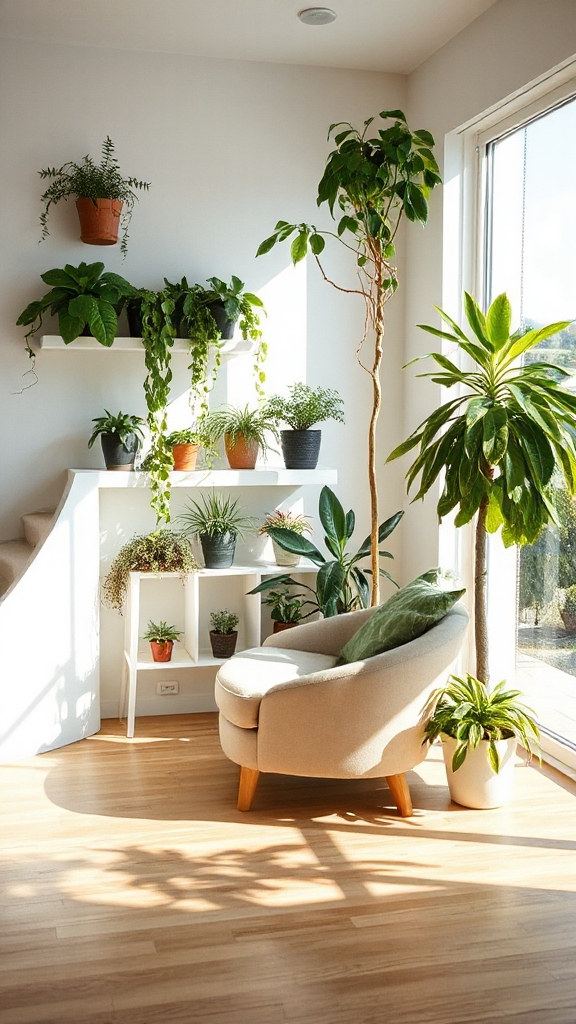
Now that your plant care supplies are neatly organized, let’s focus on giving your greenery the light they need to thrive.
Position your plants near south-facing windows for maximum sunlight exposure, or use east- and west-facing windows for medium-bright light.
If you’re dealing with low-light areas, consider using mirrors and light-colored walls to enhance natural light reflection throughout your space.
Styling Plants in Low-Light Areas

Dark corners and shadowy spaces in your home don’t have to remain bare and uninviting.
You’ll find that low-light warriors like ZZ plants and peace lilies can transform these areas into vibrant green spaces.
Create depth by layering plants of different heights, and add visual interest with textured planters. For maximum impact, use larger specimens as focal points, and incorporate mirrors to amplify available light.
Mixing and Matching Plant Heights for Visual Impact

Creating visual depth with houseplants starts with a strategic mix of heights that draw the eye naturally through your space.
You’ll want to position tall plants like Bird of Paradise toward the back, mid-height varieties like Prayer Plants in the middle, and trailing plants such as Satin Pothos in front.
This layered approach creates dimension while keeping maintenance simple for your busy schedule.
Time-Saving Plant Care Routines

Group plants with similar needs together, use moisture meters to avoid overwatering, and opt for low-maintenance varieties like Snake Plants.
You’ll save time by combining fertilizing with your watering schedule and performing quick weekly inspections for early problem detection.
Upcycled Planter Ideas for Sustainable Decor

Turn chipped teacups into charming succulent holders, create a vertical garden using old pallets and chicken wire, or design a tiered display with vintage teapots.
You’ll save money while reducing waste, and your unique planters will add character to your home’s decor.
Using Plants to Create Calming Spaces

Building a calming sanctuary within your home starts with the strategic placement of indoor plants, which research shows can greatly reduce stress and improve overall well-being.
Choose larger, leafy plants like peace lilies and Boston ferns for maximum impact, and position them where you’ll interact with them daily.
You’ll benefit from their air-purifying qualities while creating a natural, therapeutic environment that helps lower blood pressure and anxiety.
Kid-Friendly Plant Arrangements

Creating plant arrangements that captivate children’s interest requires a thoughtful balance of safety, accessibility, and visual appeal.
Choose non-toxic options like African Violets and Boston Ferns, displayed in colorful, durable containers at child height.
Let your kids personalize terracotta pots with paint or arrange mini succulent gardens. Group plants with varied textures and colors to spark their curiosity and engagement.
Quick and Easy Plant Styling Tips

Group low-maintenance plants like succulents and snake plants in odd numbers, using varying heights for visual interest.
Mix different textures and leaf types, and opt for decorative pots that complement your room’s color scheme.
Incorporating Plants Into Your Daily Routine

Smart moms know that seamlessly blending plant care into existing routines makes houseplant maintenance both manageable and rewarding.
It’s easy to incorporate quick tasks like morning watering, evening pest checks, and leaf dusting into your cleaning schedule.
Create simple habits, such as rotating plants while preparing dinner or involving kids in basic plant care during playtime.
Budget-Friendly Plant Decorating Hacks

A beautiful plant-filled home doesn’t require a hefty budget. You’ll find small succulents priced between $2 and $6, making them perfect starter plants.
Transform old jars, teacups, or wooden boxes into unique planters, and check discount stores for affordable containers.
Create eye-catching displays by grouping small plants together, and maximize space with wall-mounted or hanging planters from dollar stores.
Making Plants Part of Your Family Celebrations

Start new traditions by gifting Peace Lilies for celebrations, symbolizing purity and good fortune.
Plants create a natural, calming ambiance during gatherings while improving air quality.
Consider involving your children in plant care activities, which can foster responsibility and create lasting family memories.
Creative Container Ideas That Won’t Break the Bank
Budget-friendly options at stores like World Market, or try repurposing wooden crates and boxes you already have.
For added interest, combine different textures by incorporating decorative rocks, small branches, or sponge mushrooms.
Consider used containers made from recycled materials to stay sustainable and save money.