
You don’t need deep pockets to transform your living space into a lush, plant-filled sanctuary. Whether you’re working with a studio apartment or a spacious house, there’s always room for strategic green additions that can elevate your home’s ambiance.
By following a systematic approach to plant selection, placement, and care, you’ll discover how to create an inviting indoor garden that reflects your style while respecting your budget.
Evaluating Your Available Space and Lighting

When it comes to decorating your home with plants on a budget, evaluating your available space and lighting conditions is the essential first step.
Since the living room and bedroom are the most popular spots for houseplants, focus on these areas first.
Check your rooms’ natural light levels, noting which areas receive bright, medium, or low light, and consider how you’ll access plants for maintenance. Research shows that plants can help improve indoor air quality by reducing airborne pollutants, making placement selection even more important.
RELATED: 25 Easy Indoor Plants That Practically Take Care of Themselves.
Setting a Realistic Plant Budget

Now that you’ve assessed your space and lighting conditions, establishing a clear budget for your plant collection will help you make smart purchasing decisions.
Recent surveys show indoor plants’ popularity continues to surge across North America and Europe, making it important to plan purchases carefully. With average annual spending at $74 for houseplants, you’ll want to factor in monthly maintenance costs ranging from $50 to $400, depending on your collection’s size.
Selecting low-maintenance plant species can significantly reduce your long-term care expenses while still creating beautiful displays.
RELATED: The Ultimate Beginner’s Guide to Growing and Caring for Indoor Plants.
Selecting Low-Cost, High-Impact Plants

Smart plant selection can transform your space without draining your wallet.
Consider affordable options like the Zebra Haworthia succulent or Snake Plant, which offer high visual impact while requiring minimal care.
For instant results, try the fast-growing Pothos or Monstera Deliciosa. The Monstera’s dark green leaves create stunning patterns that make it a favorite statement piece. For low-light tolerant plants like Peace Lilies and Chinese Evergreens provide excellent value.
RELATED: 19 Pet-Friendly Houseplants Every Dog and Cat Lover Needs.
Finding Budget-Friendly Planters

Savvy plant enthusiasts don’t need to spend a fortune on decorative containers, as today’s market offers numerous budget-friendly planter options.
Major retailers like Walmart, Home Depot, and Costco provide affordable selections starting under $10, while Amazon offers competitive multipacks and sets.
Look for seasonal sales at these stores, and consider versatile options like concrete-look plastic or ceramic planters that blend style with practicality.
RELATED: 20 Beautiful Houseplants That Are Perfect Gifts for Moms, Sisters, or Friends.
Creating DIY Plant Containers

While store-bought planters can strain your budget, creating your own DIY containers offers a creative and cost-effective alternative.
Transform everyday items like plastic bottles, yogurt containers, and glass jars into unique planters by adding drainage holes and decorative elements.
Local restaurants often give away #10 tins that make excellent planters for larger plants. Ensure proper water drainage holes are added to maintain healthy plant growth.
RELATED: How to Create a Low-Maintenance Indoor Garden That Fits Your Lifestyle.
Mapping Out Your Plant Placement Strategy

A thoughtful plant placement strategy can transform your living spaces while maximizing your plants’ health and visual impact.
Start by evaluating your rooms’ natural light conditions and matching them with appropriate plant species. South-facing windows are especially ideal for sun-loving varieties like cacti and herbs. Group plants with similar water needs together, and consider scale when positioning larger specimens as focal points.
Create depth by layering plants of varying heights, keeping walkways clear and maintenance accessible.
Maximizing Window Sill Potential

Window sills offer untapped potential for creating stunning plant displays without taking up valuable floor space.
You’ll maximize your sill’s capacity by choosing compact or trailing plants and utilizing vertical hanging options.
Consider adding window sill extensions or using decorative planters in layers to create depth. For tight budgets, repurpose household items as planters and propagate new plants from cuttings.
Establishing a Plant Watering Schedule
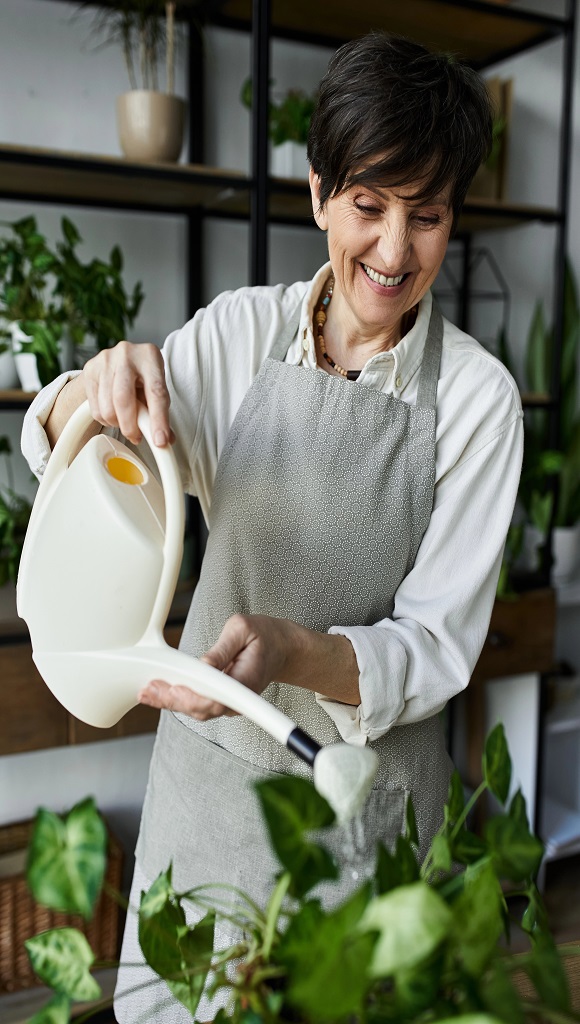
Successfully keeping your indoor plants thriving depends heavily on establishing the right watering schedule.
Check your plants weekly, but only water when the top two inches of soil feel dry. During summer, you’ll likely need to water every few days, while winter requires less frequent watering.
Water during daylight hours using room temperature water, and always let excess drain to prevent root problems.
Building Multi-Level Plant Displays

Creating multi-level plant displays transforms ordinary spaces into vibrant, living galleries while maximizing your available room.
Start with affordable ladder shelves or DIY stands, positioning taller plants at the bottom and trailing varieties on top.
Group plants with similar care needs together, and add protective drip mats beneath each pot. Rotate your plants regularly to guarantee even light exposure.
Incorporating Hanging Plant Solutions

When space is at a premium, hanging plants offer an elegant and budget-friendly solution for bringing nature into your home.
You can utilize existing curtain rods with s-hooks for trailing plants, create DIY beaded hangers, or invest in affordable IKEA planters like the CHILISTRÅN.
For even more savings, repurpose thrifted materials such as wooden bowls and twine to craft unique hanging displays.
Mixing Plant Sizes and Textures

Beyond hanging solutions, the artful combination of plant sizes and textures can transform your space without breaking the bank.
Mix small succulents with larger leafy plants to create visual interest, and pair smooth-leaved varieties with fuzzy or rough-textured ones.
Use lightweight, affordable planters of varying materials to complement your plants while maintaining a balanced, layered arrangement throughout your room.
Repurposing Household Items as Planters

Countless household items can find new life as creative and budget-friendly planters, transforming your home’s green spaces while reducing waste.
There are versatile options in your kitchen, from glass jars and tin cans to plastic containers, each offering unique potential.
Add drainage holes and fresh soil to repurpose these everyday items, and don’t overlook larger possibilities like wooden crates or old toolboxes for statement pieces.
Designing Corner Plant Arrangements

A well-designed corner plant arrangement can transform an overlooked space into an enchanting focal point of your room.
Start by selecting plants of varying heights, placing taller specimens like bamboo at the back and shorter ones in front.
Use tiered stands to maximize vertical space, and incorporate both low-maintenance succulents and air-purifying plants like spider plants for a balanced, sustainable display.
Utilizing Vertical Space for Plants

Making the most of vertical space offers an ingenious solution for plant enthusiasts with limited floor area.
You’ll find numerous budget-friendly options, from DIY trellises made with electrical conduit to upcycled wooden pallets.
Choose trailing plants like pothos or ivies for hanging baskets, while herbs and succulents thrive in wall-mounted planters.
Creating Plant-Based Focal Points

While vertical gardens maximize space efficiency, strategic placement of plants can transform ordinary areas into eye-catching displays.
Create focal points by positioning drought-tolerant specimens in central locations or near windows where they’ll thrive.
Discover some budget-friendly options by using small potted plants on tables, repurposing unique containers, or propagating existing plants to expand your collection.
Combining Plants With Existing Decor

Successfully combining plants with your existing decor requires thoughtful consideration of both design principles and spatial relationships.
Select plants that complement your room’s color scheme and style, whether modern or traditional. Place them strategically in corners, on shelves, or near furniture to create balance.
Consider leaf textures and shapes to add visual interest while maintaining proportional harmony throughout your space.
Implementing Plant Rotation Systems

A well-planned rotation system for your indoor plants can greatly improve their health while reducing maintenance costs.
Start by grouping plants with similar needs in movable containers, and rotate them every 1-2 years. Keep track of placements using a simple log, and alternate between deep and shallow-rooted plants to maintain soil health.
Clean containers between rotations to prevent disease spread.
Maintaining Healthy Plants on a Budget

Maintaining healthy plants without breaking the bank requires a balanced approach of preventive care and smart resource management.
Schedule regular inspections to catch issues early, and utilize household items like coffee grounds and eggshells for natural fertilizers.
Track your plants’ care through digital apps or logs, implement systematic watering schedules, and group plants with similar needs to streamline maintenance and reduce costs.